

Alliance E-News - September 2026
Alliance Trial Awareness
Blood Cancer Awareness Month: How Alliance Clinical Trials Are Helping Improve Treatments, Early Detection and Survivorship
September 14, 2026 – September is Blood Cancer Awareness Month, and the Alliance for Clinical Trials in Oncology is highlighting the importance of clinical research that advances treatments, explores earlier cancer detection, and improves the lives of people living with and beyond cancer.
More than 192,000 people in the United States are expected to be diagnosed with a blood cancer this year—roughly one diagnosis every three minutes. Blood cancer isn’t a single disease. It includes leukemia, lymphoma, myeloma, and other cancers and disorders affecting the blood-forming and lymphatic systems. These diseases can disrupt the production and function of healthy blood cells, affecting the body’s ability to carry oxygen, fight infection, and control bleeding.
Blood cancers can be challenging to diagnose because their symptoms can overlap with those of many other conditions. Symptoms may include unexplained bruising or bleeding, fatigue, shortness of breath, swollen lymph nodes, unexplained weight loss, fever or night sweats, depending on the type of blood cancer. People experiencing persistent or unexplained symptoms should talk to their healthcare provider.
Blood cancers can affect people of any age. Some, including leukemia and lymphoma, are among the more common cancers diagnosed in children, adolescents, and young adults. At the same time, many blood cancers are more commonly diagnosed in older adults.
But there is reason for hope. In the mid-1970s, the five-year relative survival rate was about 34% for leukemia, 47% for non-Hodgkin lymphoma, 72% for Hodgkin lymphoma, and 25% for myeloma, according to the American Cancer Society. Today, those rates are about 68%, 74%, 89%, and 62%, respectively.
That progress did not happen by chance. Clinical trials help provide the evidence needed to discover new treatments, determine which therapies work best, explore approaches to earlier detection, and find ways to help patients live longer and better after cancer.
The advances made over the past several decades have been possible because of the people who participate in clinical trials, as well as the clinicians, researchers, advocates, and communities who make this research possible.
Today, the Alliance is advancing this work through 11 clinical trials and studies spanning blood cancer treatment, cancer survivorship, early detection, genetic risk, and cancer prevention.
Active Alliance Trials for People with Blood Cancers
Leukemia Studies
Alliance A041501: A Phase III trial to evaluate the efficacy of the addition of inotuzumab ozogamicin (a conjugated anti-CD22 monoclonal antibody) to frontline therapy in young adults (ages 18-39 years) with newly diagnosed precursor B-cell ALL
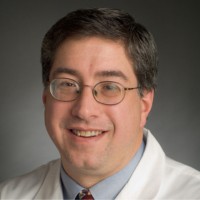 Led by Daniel DeAngelo, MD, of the Dana-Farber Cancer Center, this trial tests whether adding a targeted drug called inotuzumab ozogamicin to standard chemotherapy is safe and effective for young adults newly diagnosed with B-cell acute lymphoblastic leukemia (B-ALL). The targeted drug acts like a “smart bomb,” searching for a marker on the leukemia cells to deliver a medication directly into them, while traditional chemotherapy works to stop cancer cells in the body from growing. Researchers hope combining precision therapy with standard chemotherapy will destroy leukemia cells more effectively and improve long-term outcomes.
Alliance A042302: Phase III evaluation of fixed duration zanubrutinib plus sonrotoclax-based therapy compared to continuous zanubrutinib in previously untreated older patients with chronic lymphocytic leukemia/small lymphocytic lymphoma (CLL/SLL)
 This trial led by Jennifer Brown, MD, of Harvard Medical School, is testing whether combining two daily targeted pills (zanubrutinib and sonrotoclax) can send chronic lymphocytic leukemia (CLL) or small lymphocytic lymphoma (SLL) into remission. This would allow participants over age 65 to safely stop taking medication, rather than staying on it permanently. Instead of traditional chemotherapy, these medications work to block the specific signals and proteins cancer cells need to survive and multiply. By targeting the disease from two angles, researchers hope the combination will achieve deep remission, including undetectable measurable residual disease in some patients. Researchers also hope that a fixed duration approach could reduce treatment burden, side effects, and the need for ongoing medication if disease control can be maintained. Read the news release.
Alliance A062401: Quadruplet induction followed by teclistamab consolidation and doublet maintenance in patients with primary plasma cell leukemia: The QUANTUM Trial
 Douglas Sborov, MD, MS, of the University of Utah-Huntsman Cancer Institute, leads the QUANTUM trial evaluating a treatment strategy for adults with primary plasma cell leukemia, a rare and aggressive blood cancer. Patients will receive intensive quadruplet induction therapy followed by an autologous stem cell transplant. They then will receive consolidation with teclistamab or standard of care consolidation. Teclistamab acts like a magnet by attaching to cancer cells on one side and healthy immune cells on the other, guiding the patient’s own immune system to find and destroy any remaining leukemia cells. Following this focused targeted phase, patients then receive long-term maintenance medication to prevent recurrence. Read the news release.
Lymphoma Studies
Alliance A051902: A randomized Phase II study of CHO(E)P vs CC-486-CHO(E)P vs duvelisib-CHO(E)P in previously untreated CD30 negative peripheral T-Cell lymphomas
Led by Neha Mehta-Shah, MD, of the Washington University School of Medicine, this study tests whether adding targeted therapy to standard chemotherapy works better than usual treatments for patients with peripheral T-cell lymphoma, a rare type of blood cancer. Trial participants receive a chemotherapy combination called CHO(E)P, which includes cyclophosphamide, doxorubicin, vincristine, etoposide, and prednisone. It is designed to kill cancer cells and stop them from multiplying throughout the body. In addition, researchers are adding a targeted therapy like duvelisib—which blocks specific proteins the cancer cells need to grow—or CC-486—a chemotherapy medication—to see if hitting the cancer from multiple angles makes the treatment more effective at improving outcomes.
Alliance A052101: A randomized Phase 3 trial of continuous vs. intermittent maintenance therapy with zanubrutinib as upfront treatment in older patients with mantle cell lymphoma
This Alliance A052101/INTERCON trial is studying whether taking planned breaks from treatment is just as effective as continuous daily medication for adults with mantle cell lymphoma (MCL). Led by Anne Beaven, MD, of UNC Lineberger Comprehensive Cancer Center, participants first receive a combination of zanubrutinib (a daily targeted pill) and rituximab (antibody therapy) to bring the disease into remission. Once participants achieve a complete remission, participants are randomly assigned either to continue taking zanubrutinib every day or pausing the drug and only restarting if the lymphoma returns. By testing this intermittent approach, researchers hope to maintain long-term control over the disease while reducing treatment burden, toxicity, and potentially treatment-related costs.
Other Blood Cancer Studies
MM1MDS-A01: A randomized Phase II trial of enasidenib-based therapies versus cedazuridine-decitabine in higher-risk IDH2-mutated myelodysplastic syndrome: A MyeloMATCH sub-study
Part of the national MyeloMATCH precision medicine initiative, MM1MDS-A01 is evaluating whether adding a targeted pill called enasidenib to oral hypomethylating-agent combination ASTX727 (cedazuridine and decitabine) helps patients with higher-risk myelodysplastic syndrome achieve longer-lasting remission. This study specifically focuses on patients whose bone marrow cells carry a specific gene change called an IDH2 mutation. Standard ASTX727 works to alter abnormal blood-cell production and disease biology and helps with healthy bone marrow recovery, while enasidenib targets and blocks the mutated IDH2 enzyme that fuels cancer growth. By combining these two oral therapies, researchers hope to attack the disease from multiple angles to improve remission rates.
MM1YA-A04: Phase II study of cytarabine + daunorubicin (7 + 3) + gemtuzumab ozogamicin vs. cytarabine + daunorubicin (7 + 3) + venetoclax for the treatment of newly diagnosed core binding factor acute myeloid leukemia (CBF-AML) in younger adults: A MyeloMATCH sub-study
This is Phase II study designed for younger adults who have been newly diagnosed with a specific subtype of blood cancer called core binding factor acute myeloid leukemia (CBF-AML). Every participant in the trial receives standard initial treatment consisting of two chemotherapy drugs, cytarabine and daunorubicin (commonly known as the “7+3” regimen), combined with one of two targeted anticancer therapies: gemtuzumab ozogamicin (an antibody-drug conjugate) or venetoclax (a drug that blocks a key survival protein in cancer cells). By directly comparing these two treatments, researchers aim to discover whether adding venetoclax to standard chemotherapy is as safe and effective as using gemtuzumab ozogamicin.
Research Focused on Early Detection, Prevention and Survivorship
Alliance A232301CD: An enhanced eHealth and chatbot-enabled delivery model for clinical genetic services in community AYA cancer patients
Angela Bradbury, MD, of the University of Pennsylvania Abramson Cancer Center leads the AYA Access Study exploring whether online genetic education and at-home genetic testing can make genetic risk information more accessible to adolescents and young adults (AYA) with a history of cancer. The study addresses barriers that can prevent young adults from accessing genetic services. This study could be relevant to young cancer survivors, including survivors of blood cancers, who may benefit from improved access to genetic counseling and testing. Since many blood cancer survivors will live decades after surviving cancer, understanding the health risks that come from their type of cancer or the treatments they received may help them live healthier lives post-cancer. Read the news release.
Alliance A222302: Distance-based exercise to preserve function and prevent disability (DEFEND)
Kathryn Schmitz, PhD, MPH, of UPMC Hillman Cancer Center and Jennifer Ligibel, MD, of Dana-Farber Cancer Institute, lead the DEFEND study exploring whether a structured exercise program delivered entirely through telehealth can help patients receiving chemotherapy maintain physical function, reduce fatigue, and prevent disability. Although this trial is focused on patients with solid tumors rather than blood cancers, it illustrates that the Alliance’s broader work to improve survivorship and quality of life during cancer treatment. Read the news release.
Alliance A212102: Blinded reference set for multicancer early detection blood tests
Marie Wood, MD, of the University of Colorado School of Medicine, leads this study to collect and store blood and tissue samples from people with and without cancer to create a blinded reference set for evaluating multicancer early detection tests.
Alliance A211901: Reaching rural cancer survivors who smoke using text-based cessation interventions
Devon Noonan, PhD, MPH, FNP-B, of Duke University School of Nursing, leads Project Reach, a Phase III trial evaluating a text-based smoking cessation intervention for cancer survivors living in rural communities. Because smoking can affect cancer outcomes and overall health, the trial aims to identify accessible ways to help cancer survivors stop smoking.
Continuing Progress
During Blood Cancer Awareness Month, the Alliance recognizes the patients and survivors who participate in clinical trials, the families and advocates who support them, and the clinicians and researchers who dedicate their expertise to advancing cancer care.
Every clinical trial adds to what we know. Every participant helps move science forward. And every discovery brings us closer to a future where fewer people are diagnosed with blood cancer, and more people survive it.
###
The Alliance for Clinical Trials in Oncology is a national leader in advancing cancer research, uniting more than 26,000 cancer specialists at 112 main institutions and 1,400 affiliates across the U.S. and Canada. As part of the National Clinical Trials Network and a leading research base for the NCI Community Oncology Research Program, the Alliance conducts pioneering, practice-changing clinical trials that improve outcomes and reshape standards of care. Our work has led to multiple FDA approvals, influenced national guidelines, and produced hundreds of high-impact publications. More than 40,000 participants have taken part in Alliance studies, and our growing biospecimen repository now includes more than 1.5 million samples, collected over the past 30 years. Learn more at allianceforclinicaltrialsinoncology.org.


